

 Blog Overview
A database in the Kingdom does not mean the data is in the Kingdom. This article maps every copy, explains what the draft amendments published on 6 October 2026 propose, and how to build the contracts and incident response before you are asked for evidence.
When a Saudi company is asked where its customer data sits, the answer is usually a cloud region: “our database is in Saudi Arabia”. That answer is true and incomplete. The same customer record is copied into a backup in another region, quoted in a support ticket, attached to an email campaign, summarised in an analytics tool, indexed by an internal search service, and pasted into a chat assistant by an employee trying to answer faster. The full set of copies decides residency, not the primary database alone.
Since September 2024 the Personal Data Protection Law has been fully enforceable. On 6 October 2026 SDAIA published draft amendments to the Implementing Regulation, and the public consultation closed on 5 November 2026. The draft proposes a general requirement to store personal data inside the Kingdom with limited exceptions, and breach notification within 72 hours of awareness without a harm threshold. None of it is in force yet. It is still the clearest signal of the direction the regulator is taking, and enough to make a data map worth building now. This article is an engineering view of architecture and contracts, not legal advice.
What is in force, and what the draft adds
The Personal Data Protection Law has been fully enforceable since September 2024. The transition period that many companies treated as an open extension is over. The practical effect is that lawful basis, purpose limitation, retention, breach handling and processor contracts are no longer a future project. They are lines you are asked about today in a requirements document, a client audit, or an investigation after an incident.
On 6 October 2026 SDAIA published draft amendments to the Implementing Regulation, and the consultation closed on 5 November 2026. The draft proposes localisation of personal data inside the Kingdom with limited exceptions, and breach notification within 72 hours of awareness. The wording matters: the draft proposes; it does not yet require. Build on the text in force today, but an architecture that could not meet the draft if adopted is a bet on the final wording.
The phrase that will carry the operational weight is “limited exceptions”. The fate of every system outside the Kingdom will turn on the exception process: who files it, what evidence is required, and what alternative was assessed. Organisations that build that file now will move faster if the amendments are adopted; those that wait for the final text will start from zero on the day it takes effect.
Residency is a map, not a switch
Start with data categories, not systems. Identity, contact details, orders, payment data, support content, marketing preferences, device data, and employee records. For each category ask why it is collected, where it came from, which system reads it, how long it lives, and who can open it. The answers show that “the data” is not one block, and that a single rule applied to all of it will be wrong in one direction or the other.
Then move to systems: the primary database, backups, logs, analytics, the support desk, email and SMS, the content delivery network, AI tools, and the disaster recovery copy. The table below is the shape we start every review with, because it makes the hidden copies visible before they become a problem in front of a client or an auditor.
| Data layer | Where it usually sits | Who can read it | The question to ask |
|---|---|---|---|
| Primary database | A cloud region inside the Kingdom | The application and operations team | Is the region pinned in infrastructure as code or set by hand? |
| Backups | Another region or a default account elsewhere | The platform team and the provider | Where is the copy, and when was a restore last tested? |
| Logs | A monitoring platform that may sit outside the Kingdom | Engineers and support | Do logs contain identifiers, addresses, or full request bodies? |
| Analytics | Measurement tools and advertising tags | Marketing and product | How much is aggregated, how long do identifiers live, and where are they sent? |
| Support desk | A ticketing system and its attachments | The support team and the vendor | Are attachments and call recordings stored, and where? |
| Email and SMS | An external campaign provider | Marketing and support | Does the content pass through another delivery provider? |
| Media and network | A global content delivery network | The audience and any visitor | Is personal data present in images, links, or file names? |
| AI tools | External interfaces and chat assistants | Whoever uses the tool | What is sent, and is it retained for model training? |
The table is deliberately boring. The failures we see are not exotic: a backup in the default region, logs shipped to a monitoring vendor outside the Kingdom, a support tool that stores attachments in another country, and an employee pasting a ticket into an external tool. Nobody decided to break a rule. Every step was the default setting, and the default is the most dangerous decision in this file because nobody actually makes it.
The subprocessor chain
The primary provider is not the only party. Hosting has a provider, the managed database has one, and monitoring, email, SMS, support, CRM, payments and analytics each have their own. Every provider has subprocessors, a storage region, and a different contract. Your agreement with the first provider does not automatically bind its subprocessors. What binds you is what you signed and what the provider commits to in its published terms.
If you process data for clients, you are their processor, and their obligations flow to you. They will ask for a processing agreement, a subprocessor list, notice before any change, and a description of safeguards. The best answer is one maintained register: system, purpose, data categories, region, processor, contract reference, and review date. The register does not need expensive software. It needs an owner who treats updating it as part of the job.
A common mistake is writing “the provider complies with the regulations” into the contract and leaving the rest. Compliance is a general description; an audit asks for detail: which region, which encryption, who holds the keys, who can read the logs, and how long a deletion trace remains. Those details protect the client, not the general phrase. Ask that a change of region or a new subprocessor triggers written notice, not an entry in a changelog.
Backups, logs, and analytics
A backup is a complete copy of personal data, yet it often sits in a default region nobody chose. Ask where the copy is, whether it replicates to a second region, who can restore it, and when a restore was last tested. A backup that has never been restored is not a backup; it is a large file of confidence. Ask about deletion too: when a record is removed from the database, does it leave the backups within the stated period, or does it stay forever?
From reading to shipping
Want this built, not just explained?
Bring us the problem behind the article. We will tell you what it takes, what it costs, and whether we are the right team.
Logs are more deceptive. A request log may carry an identifier, an email and an address; an error log may carry the entire request body. The monitoring vendor stores it in its own region, and engineers who may be outside the Kingdom read it. Set retention, redact sensitive fields before they leave the system, restrict access, and document the decision in the register so the next person inherits it.
Analytics and session replay are a third layer. An event with a user identifier links behaviour to a person, and a replay tool may record what a customer types into a form. Mask the fields, stop collecting what you do not need, and ask every tool where it stores its data. Test data is not an exception: a production copy in a staging environment is a residency leak wearing a test badge.
Cross-border transfer is a file, not a sentence
If the draft is adopted, every exception will need a file: which data, to which country, to which recipient, under which safeguard, approved by whom, and reviewed when. Even under the current text, a transfer needs a lawful basis and safeguards. The file is what you show a client or an auditor, not the sentence saying that a transfer is permitted.
Put five lines in the contract: a named region, a subprocessor list with notice before change, a breach notification window that lets you meet your own, deletion and return terms, and a right to audit or to assurance evidence. Add a security schedule that matches the configuration you actually bought, not the default shown in the sales demo.
Be careful with “the provider is compliant”. Compliance is not a fixed property of a vendor; it is the result of a match between the data, the purpose, the configuration and the contract. The same provider may be adequate for a client with no sensitive data and insufficient for you. The right question is: compliant for which data, for which purpose, in which configuration, under which contract?
Incident response when the clock is 72 hours
The draft proposes 72 hours from awareness of an incident, with no harm threshold. That changes the response runbook: you cannot wait for full confirmation to start the clock. The clock starts at awareness, and assessment, evidence collection and notification begin with it. The difference between a team that starts at awareness and one that waits for confirmation is the difference between a notice on time and a late notice with no explanation.
Assign the roles before an incident: who declares it, who assesses the affected data, who decides on notification, who speaks to customers, and who keeps the timeline. The timeline is what explains a delay if one occurs, and shows that the decision rested on the information available at the time rather than on a later denial.
Rehearse at least once. Take a lost backup, an exposed log, or a breached support tool, and run the exercise with the same timeline you would use in a real incident. The first rehearsal exposes gaps cheaply, and it also exposes that half the map is out of date and the number of the person to call has changed.
The residency checklist
This list is not a legal audit, but it is the minimum that makes a conversation with counsel and providers productive. Every item can be evidenced by a file or a configuration, not by a verbal answer.
A written data map for every category: purpose, source, systems, retention, and who reads it.
A subprocessor register with the region, role, contract reference, and review date.
The hosting region pinned in infrastructure as code, not in a manual setting one person knows.
Backups in the required region, with a documented restore test rather than a verbal promise.
Redacted logs with a defined retention period, and access limited to the people who need it.
Analytics and session replay configured to mask sensitive fields before anything is sent.
A contract that requires notice before a change of region or subprocessor.
A rehearsed incident response with a timeline and decisions, before a client or auditor asks for one.
Frequently asked questions
Where does the law stand on keeping Saudi data in the Kingdom? The law has been enforceable since September 2024. The draft amendments published on 6 October 2026 propose a general localisation requirement with limited exceptions. They are not adopted, and the consultation closed on 5 November 2026. Treat residency as a design constraint and confirm the current position with your counsel.
If our cloud region is in Saudi Arabia, are we done? No. The region is one line in the map. Backups, logs, analytics, support attachments, email, the content delivery network and AI tools are separate copies, often with different vendors and default regions.
What should a hosting or SaaS contract include? A named region, a subprocessor list with change notice, a breach notification window that lets you meet your own, deletion and return terms, a right to audit or assurance evidence, and a security schedule that matches the configuration.
How long do we have to report a breach? The draft proposes 72 hours from awareness without a harm threshold. The rules in force may differ. Build the runbook so assessment starts at awareness, not at confirmation, and leave the notification decision to counsel.
Do we need a local hosting provider? Not automatically. You need a configuration that keeps the required data in the required place, with evidence. A local provider simplifies that; a global provider with a Saudi region and the right contract can also achieve it.
Sources
- SDAIA: Personal Data Protection Law portal — the text in force and the guidance material.
- Clyde & Co: draft amendments to the Implementing Regulation — a summary published in October 2026.
- Reed Smith: consultation on the amended Regulation — localisation and breach notification.
- Rasad: the PDPL checklist for client portals — how the requirements become screens and permissions.
- Rasad: integration services — connecting local and external systems with defined controls.
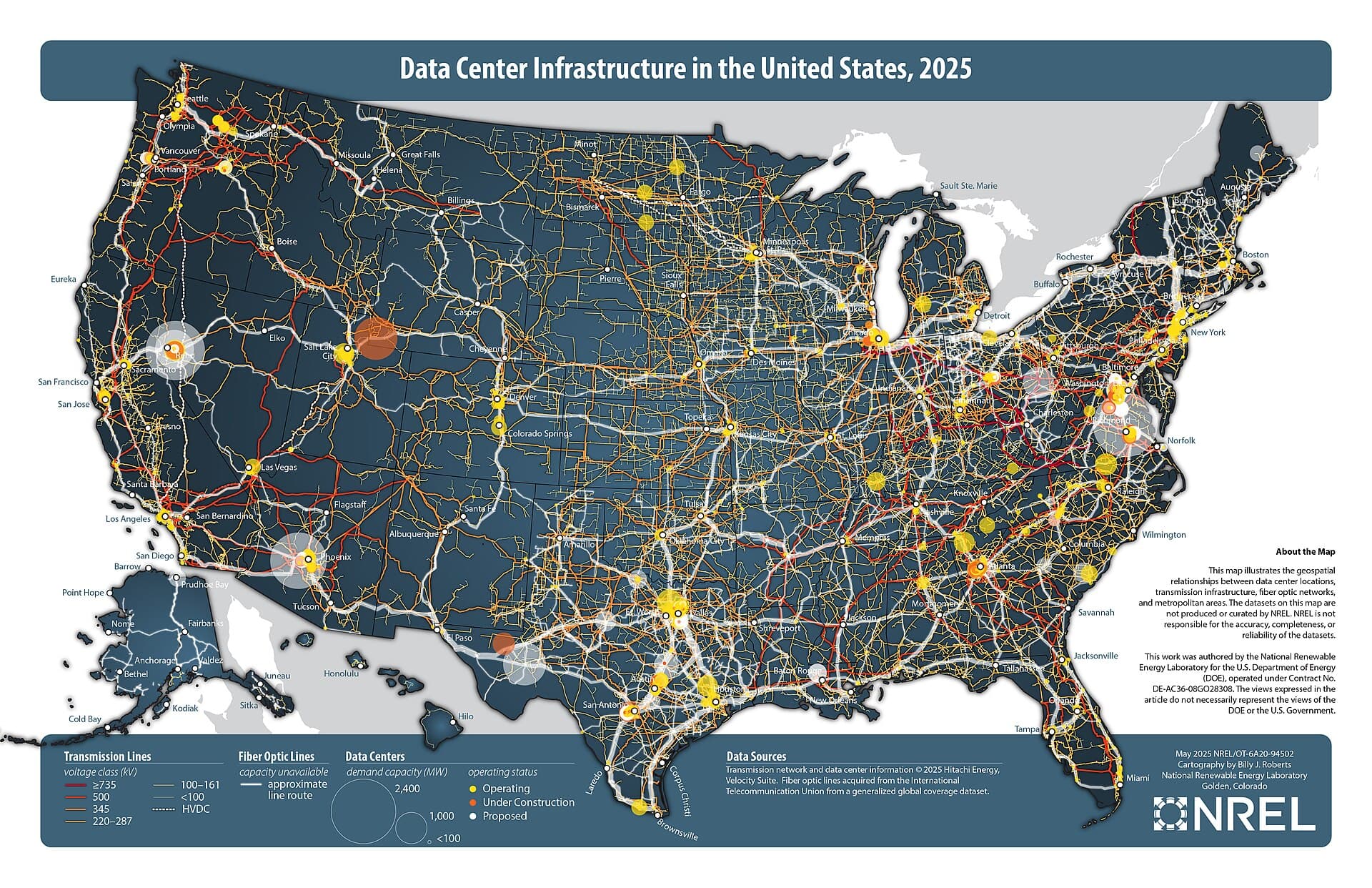
Cover image: DOE/National Renewable Energy Laboratory (NREL), Public domain, via Wikimedia Commons.
